
Feet Are Your Foundation
In Chinese Medicine, we’re taught to observe the tongue, the complexion, even digestion as reflections of health. Yet the feet are rarely used as a marker. Perhaps they should be. Take a look at your feet. Do they look strong, adaptable, alive? Or do they reflect a lifetime of being confined, cushioned, and underused?
As we age, our habits often disconnect us from the ground. Supportive shoes replace sensory input & foot strength. Barefoot time shrinks and is replaced by rigid house shoes. Our feet only experience repetitive & predictable movement instead of exploratory. The feet should be responsive to uncertain terrain. Our feet is an information highway to the brain that improves how we function. So when the foundation goes quiet, the rest of the system has to compensate.
What we begin to lose is not just strength. We lose sensory clarity, the brain’s ability to map where we are in space. We lose mobility through the joints of the foot and ankle. We lose tissue elasticity through the fascia that should be spring-like and adaptable. These losses don’t stay isolated to the feet. They travel upward. Balance becomes less certain. Stability becomes more effortful. Movement becomes something we think about rather than trust. And when the brain senses that uncertainty, it does what it is designed to do. It protects. That protection can show up as tension, hesitation, or pain.
The crack in the foundation rarely announces itself loudly. It simply changes how you move over time.
FEET FIRST
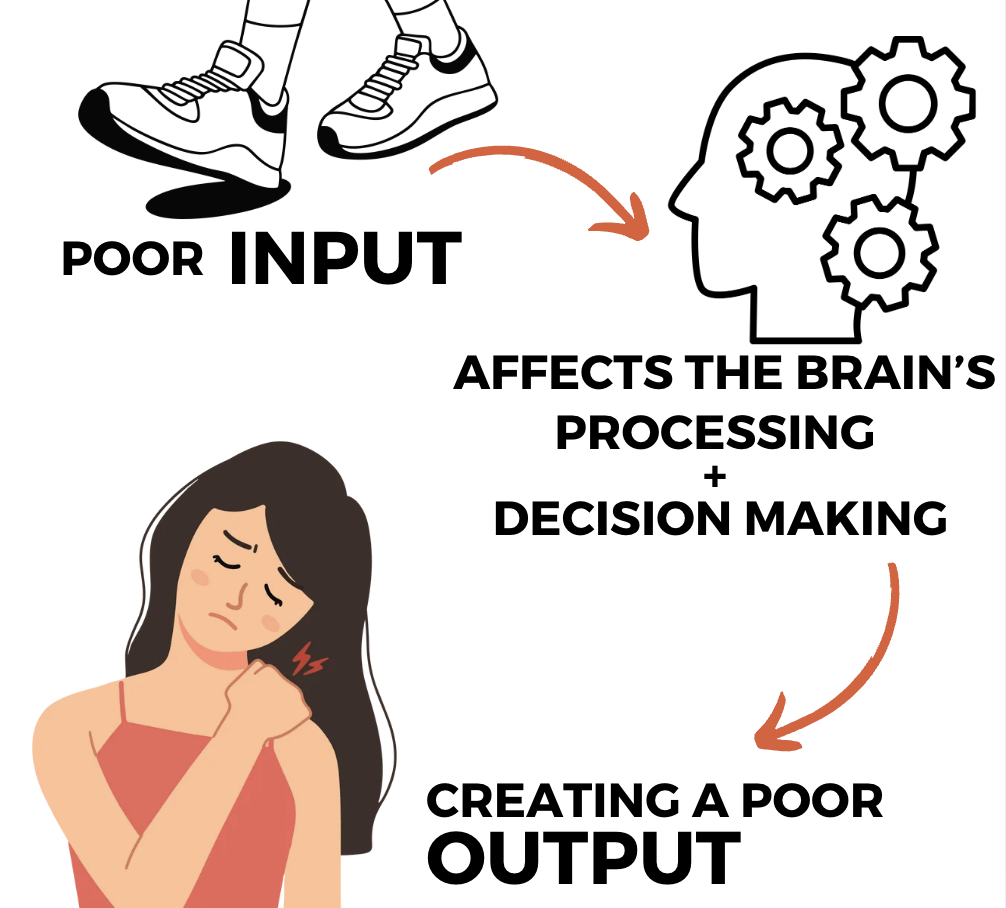
Your feet are your foundation. They are in constant contact with the ground, sending information about pressure, balance, and position back to the brain. If that input is clear and responsive, your brain has a better map to work from. Movement feels more stable. Reactions are quicker. Confidence improves.
If that input is dull, limited, or ignored, the brain has less to work with. The result is often stiffness, hesitation, or a sense that your body is not as reliable as it once was.
This is why training the feet matters so much as we age. It is not just about strengthening them. It is about improving the quality of information being sent to the brain so the brain can make better decisions about how you move.
When you begin to train this way, something shifts. You are no longer just exercising. You are refining communication between your body and your brain. Movement becomes more intentional. Patterns begin to change. You feel more connected to what you are doing.
This is the essence of Age Training. It is not about doing more. It is about understanding where movement begins and building from there.
