
Autumn Qi Chats | Week 2
Respiration + Relearning
This week we discuss why we train with the seasons and learn what Autumn has to teach us.
Breathing Is Movement
When you think about breath training, you probably think about breathing in and out, taking a deeper breath, or slowing your breathing down. But this Autumn, we're going to expand that definition.
Breathing is movement.
Every breath requires coordination between your diaphragm, rib cage, thoracic spine, abdominal wall, and respiratory muscles. Your nervous system organizes that movement over and over again, thousands of times every day.
So if you primarily breathe by lifting your upper chest and shoulders, rarely expand the back of your ribs, or one side of your rib cage doesn't move as well as the other, you're also repeatedly practicing that particular movement strategy.
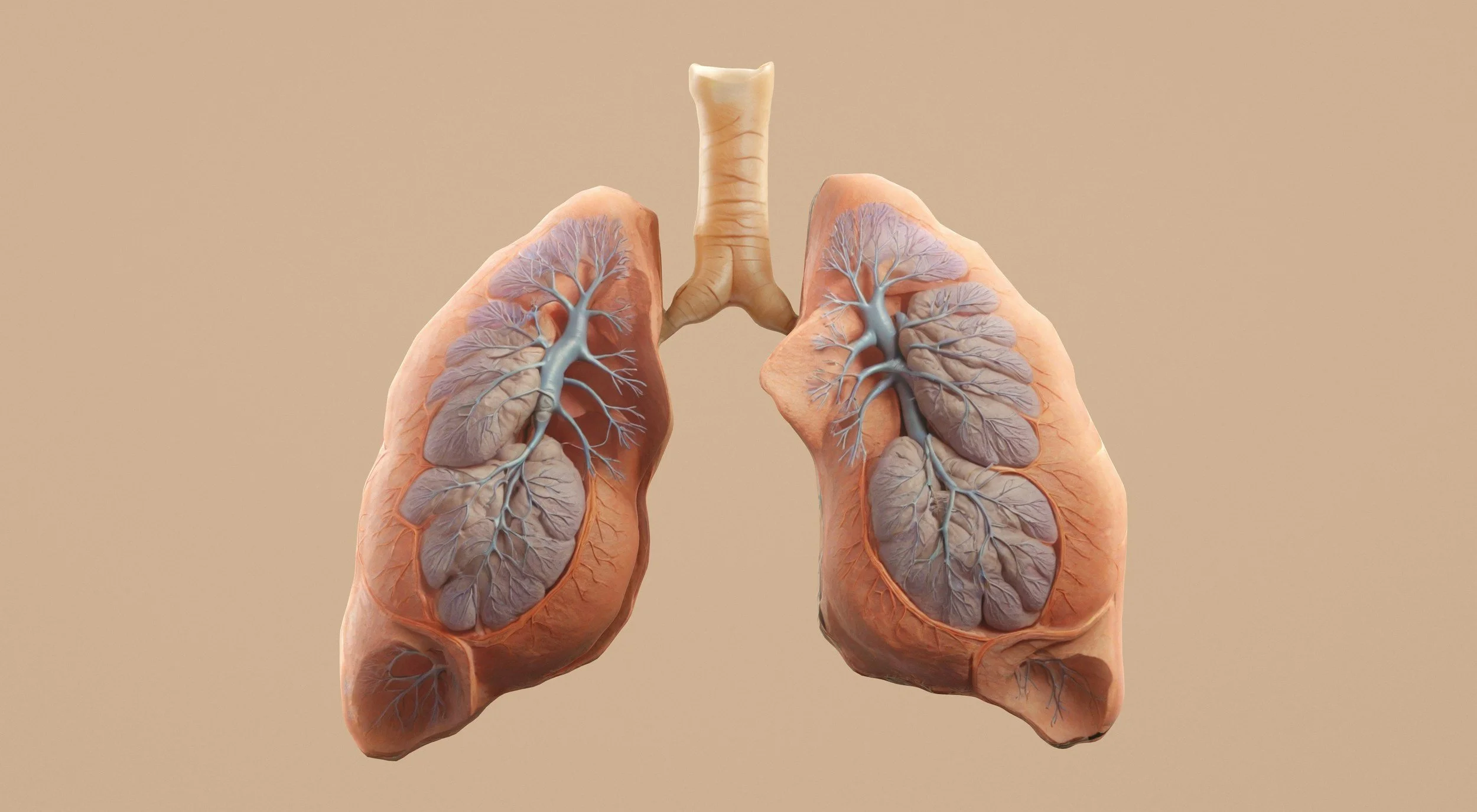
This is why we're going to look at the lungs as more than a way to move air in and out. How you organize your breath interacts with how you organize your body, including your posture, trunk stability, movement and potentially even your experience of pain.
Qigong has understood breath in this larger context for a very long time. Qigong isn't simply a breathing practice. It traditionally brings together the regulation of body, breath and mind, with breathing coordinated with posture, movement and attention. Even modern descriptions of Qigong retain these three interconnected components.
RELEARNING HOW TO BREATHE
Before we start changing breathing rhythms or adding complicated exercises, we're going to get curious about what actually moves when you breathe.
This week we'll explore two things:
1. Can your rib cage move with your breath?
Place your hands around your lower ribs and breathe normally. Feel for expansion toward the front, sides and back. Does your whole rib cage participate? Does one side move differently? Do your shoulders immediately lift? We're not looking for perfection. We're discovering what movement options you currently have.
2. Can you identify your diaphragm at work?
“Diaphragmatic breathing” is often taught as belly breathing, but pushing your belly outward doesn't necessarily tell us what your diaphragm is doing. Your diaphragm is already the primary muscle responsible for quiet inhalation. As it contracts and descends, it changes pressure within the trunk while the lower rib cage and abdominal wall respond.
Instead of trying to force a big belly breath, we're going to feel where your breath creates movement and begin connecting the diaphragm, ribs and abdominal wall as one coordinated system.
That's the beginning of respiratory competency: not learning one “correct” way to breathe, but giving your brain and body more breathing options.
And that's where we're headed next: how your diaphragm and breath can become part of the midline stability you need to move, balance and get stronger.
Neuro-Qi Tip o’the day!
FEEL YOURSELF BREATHE
Take the time to just breathe and hold the body. In today’s Qi Chat, I demonstrate three ways you can pause & feel yourself breathe.
Start with the Control Pause exercise as your baseline
Try the three inhalation discovery drills from this week’s chat
Then play with the three exhalation discovery drills
Reassess with the Control Pause and see where you are and what’s changed!
*Video posts every Friday by 11:30am MDT
Resources: https://pmc.ncbi.nlm.nih.gov/articles/PMC3085832/
