
Autumn Qi Chats | Week 8

4 steps you can take to alleviate low back pain!
This week we discuss the Threat Bucket, how your nervous system responds to accumulated stressors, and why low-back pain isn't always just a back problem.
When your back hurts & you think you did something… think again.
When your low back begins to hurt, what's your first assumption? Perhaps you've strained something, slept incorrectly, or simply reached an age when back pain is inevitable.
But pain is more complicated than that.
Your nervous system is constantly evaluating information from your body and environment to determine how much protection you might need. Tissue irritation and injury matter but know that doesn’t always equate to pain. In fact, your sleep, stress, breathing habits, previous injuries, movement confidence, and recovery might play a bigger role in what you’re experiencing.
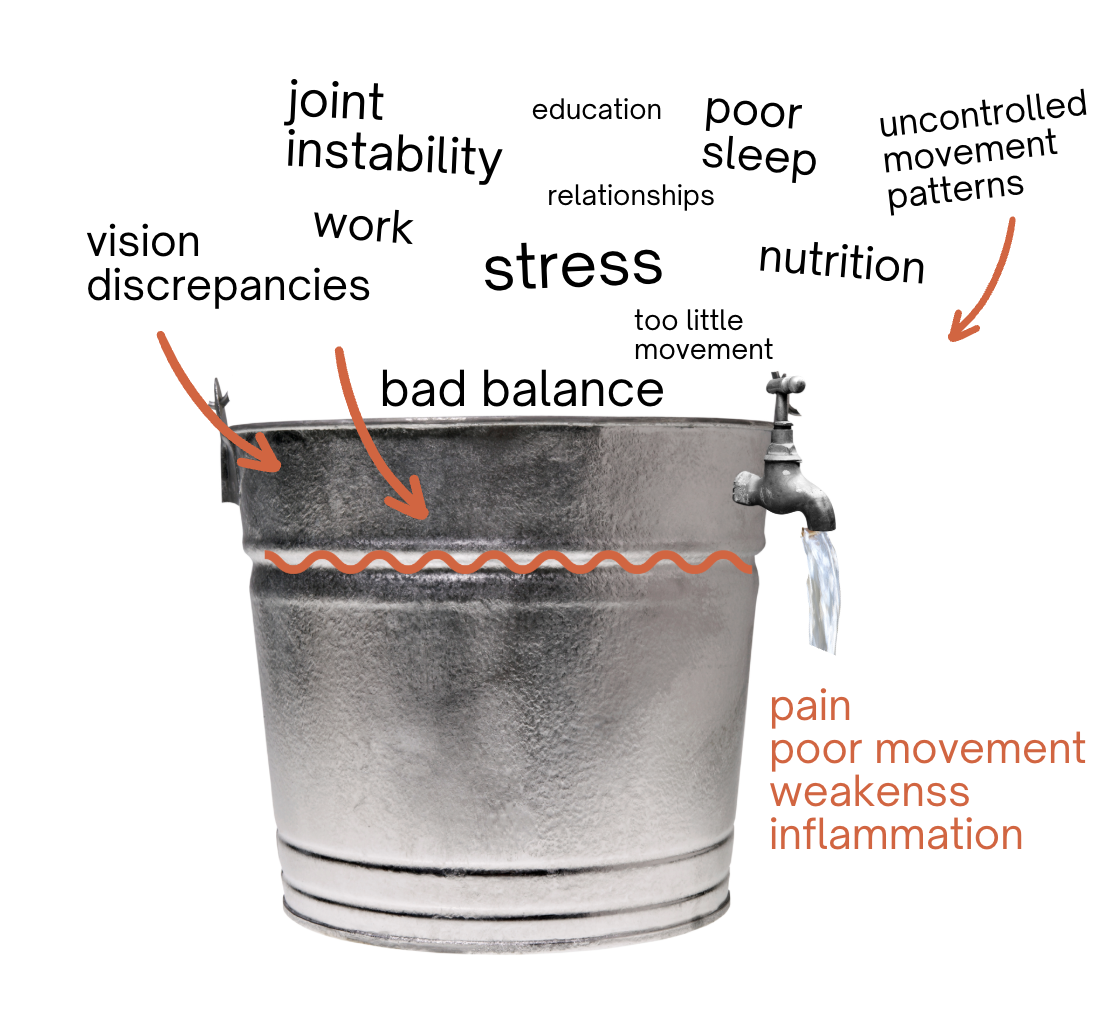
Think of these influences as filling a Threat Bucket.
When the bucket becomes too full, your nervous system may become more protective. Movements that ordinarily feel comfortable might suddenly feel stiff, guarded, or painful.
And here's the interesting part: You don't necessarily have to address your low back directly to influence how it feels.
Improving your breathing, exploring gentle movement, stimulating your feet, or reducing unnecessary muscular tension may change some of the information your nervous system is receiving.
This is where our Age Training approach becomes valuable. Rather than immediately trying to stretch, strengthen, or fix the painful area, we can explore which inputs help us move more comfortably.
Draining the Threat Bucket
As my mother used to tell me when I was young, “To assume makes an ass out of you and me.” And that lesson applies to our nervous system, especially when our Threat Bucket is overflowing!
We can't assume an exercise will automatically make us feel better. Every drill has the potential to either fill or drain our Threat Bucket. When we're experiencing pain, the goal is to introduce movement that feels safe, familiar, and predictable rather than adding more stress to an already protective system. That's why today's exercises are intentionally simple and minimal.
We'll explore these concepts further in today's Qi Chat video, including how to recognize whether a drill is helping or adding to your nervous system's protective response. That said, you want to assess your current movement before we try any of these drills to see how the nervous system responded.
Remember: Don't assume a drill is helping. Assess, train, and reassess!
Okay, let’s go over the 4 concepts that can help you drain that threat bucket and get your back, back!
1. BREATHE | Fuel + Mechanics
As we explored last week, how you breathe influences your body from moment to moment, both metabolically and mechanically. Breathing affects CO₂ regulation, oxygen delivery, rib-cage mobility, and muscular tension. From a neurological perspective, inefficient breathing patterns may add to the demands your nervous system is already managing.
2. SOFTEN | Reduce Unnecessary Tension
One of my favorite Qigong cues is simply to soften, especially when a movement feels restricted or "sticky." Whether you're practicing a deep side lunge or holding a Zhan Zhuang posture, softening doesn't mean collapsing. It means releasing unnecessary muscular tension while maintaining support. This may allow your breathing to settle, movement to become more comfortable, and, through a Qigong lens, Qi to flow more freely.
3. STABILIZE | Create Support
Your spine needs both mobility and stability. Your diaphragm, abdominal muscles, pelvic floor, and spinal stabilizers work together to manage pressure and coordinate movement. The goal isn't to brace harder or hold everything tight. It's to develop adaptable stability, allowing your nervous system to use the right amount of muscular support for the task.
4. SENSE | Improve Sensory Information
From the ground up, your brain is constantly integrating information to coordinate movement and balance. Sensory input from your feet, vision, and vestibular system (inner ear) helps your brain understand where you are in space and how to respond. When sensory information is unclear or unfamiliar, movement may feel less predictable. Improving sensory awareness and coordination gives your nervous system more information to work with.
Now, return to your baseline movement you tested at the beginning and see...
Is the movement easier or more comfortable?
Has your range of motion changed?
Do you feel less guarded or more confident?
Not every drill will produce an immediate change, and that's useful information too.
AGE TRAINING LESSON: Pain is influenced by more than the condition of a single body part. By exploring breathing, sensory input, movement, and recovery, we can help the nervous system discover more options for moving comfortably.
Neuro-Qi Tip o’the day!
Manage your bucket!
✔ Don't assume pain means damage. When your back feels stiff or painful, get curious about what else might be filling your Threat Bucket. Poor sleep, stress, fatigue, and unfamiliar movement can all influence how protective your nervous system becomes.
✔ Less can be more. When you're experiencing pain, start with small, familiar, comfortable movements. Your goal isn't to push through discomfort but to rebuild confidence in movement.
✔ Let your body give you feedback. Before trying an exercise, notice how you move and feel. Reassess afterward. Did your mobility, comfort, or confidence improve? Don't assume a drill is helping. Test it!
*Video posts every Friday by 11:30am MDT
Resources:
https://www.sciencedirect.com/science/article/abs/pii/S1058913906800070
