
Spring Qi Chats | Week 4
Age Training + Inner Ear
Getting older shouldn’t mean feeling old. When movement becomes harder and pain shows up more often, it may be time to train your brain and inner ear, not just your muscles
Feeling Better Starts with Your Brain…
We have all experienced pain and we have all be privy that here’s ‘different types’ of pain. There’s the pain that lasts seconds once you realize that the sharp poke wasn’t a snake but a stick. There’s the pain that inhibits how you move and over time inhabits your mind leaving you to wonder ‘will this ever go away’? And so on.
Think of pain as an experience. It’s individualized due to situations in both our external and internal environment that makes us all know that pain, simply put, is weird.
And while we all have experienced pain (or are currently experiencing pain) we need to learn more about the neuro-science behind this annoying experience. There are a few misunderstandings in pain management.
We need to understand that pain is a protective output coming from the brain.
We need to understand that treating chronic pain is different from acute pain.
We can train ourselves INTO pain just as we can train OUT of pain.
Acute pain makes sense. You fall, strain a muscle, or have surgery. Tissue becomes irritated or damaged, and the brain produces pain to protect the area while healing takes place. Bones repair. Muscles adapt. Connective tissue remodels. In many cases, people can return to full strength and function within weeks or months.
But what happens when the tissue has healed… and the pain remains?
This is where the story changes.
Pain is NOT a signal coming from the body. If we want to understand the neuroscience behind pain, you have to remember the input - processing/decision making - output concept for brain function. When the brain becomes uncertain about inputs like movement, balance, or spatial safety, it can continue producing protective outputs such as stiffness, fatigue, hesitation — or pain.
In simple terms, pain can “settle in.” Not because the body is broken, but because the brain is still operating as if something might be wrong.
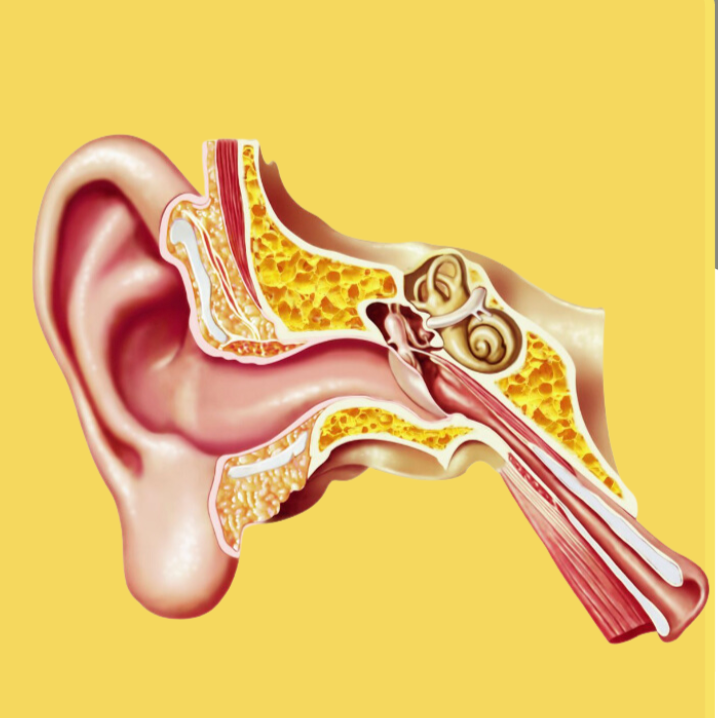
Why do we train the inner ear?
Modern neuroscience suggests that areas involved in pain processing are closely connected with systems that help us understand where we are in space, including the vestibular system of the inner ear. When balance signals become less reliable with age, injury, or inactivity, the brain may increase protective strategies to reduce perceived risk.
This is why Age Training looks beyond muscles and joints. It recognizes that improving sensory clarity, balance and spatial awareness, can help the brain feel safer, and a safe brain often produces less protective pain.
Your inner ear is constantly sending information to the brain about head movement, orientation, and stability. This information helps determine how safely you can walk, turn, bend, or reach.
When these signals become weaker or less coordinated, the brain may interpret the environment as more unpredictable. The result is often subtle but meaningful changes: slower movements, increased muscle tension, reduced range of motion, and sometimes persistent discomfort.
Training the inner ear helps restore clarity.
Neuro-Qi Tip o’the day!
Restore that input
Morning scrubs - improve that brain to body maps
Massage the neck - move that cerebral spinal fluid and hydrate the fascia for better movement
Massage the feet - before you move, get those feet to reconnect
Strengthen the feet - try your morning routine to waken the feet and get into the main drill
Shake - Bounce - Arm Swings (1-3 minutes each!)
*Video posts every Friday by 11:30am MDT
Resources:
https://pmc.ncbi.nlm.nih.gov/articles/PMC10002604/
