
Spring Qi Chats | Week 7
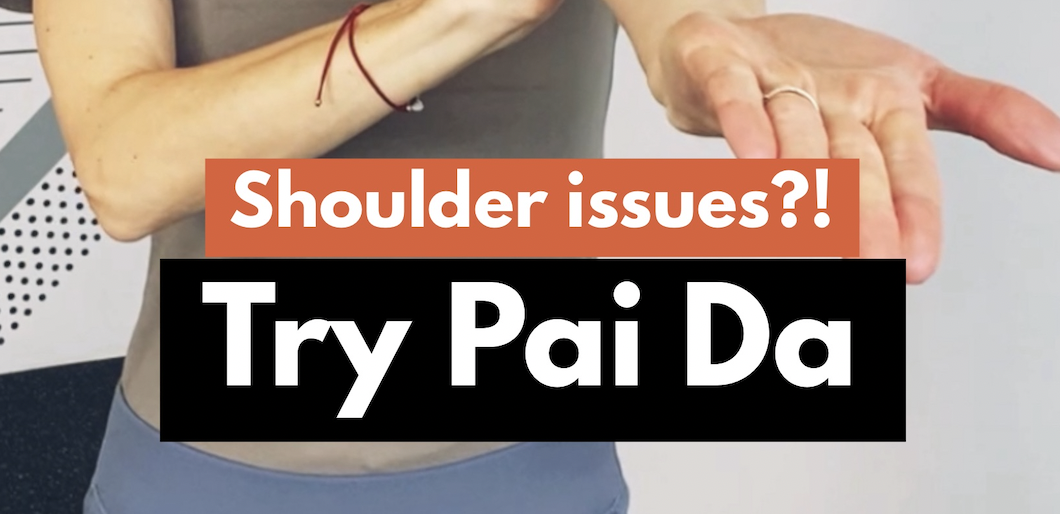
Pain + Pai Da
Things change as we age and utilizing Pai Da in it’s more truest form is going to be a game changer for better movement and less pain as you age.
More than just ‘tapping’…
This season you have learned a Spring Pai Da protocol focusing on areas where Qi is more commonly stuck during the season of rising Yang Qi. In the Seasonal Qi practices, I teach the Spring Qigong protocol, where you learn to tap specific acupoints along the shoulders, the hips, the ribs and the thighs.
It’s important to know that Pai Da can be understood as more than “just tapping.” In classical Qigong lineages it is used to move qi and blood. Pai Da is used to open the channels and strengthen sinews, joints by ‘removing stagnation’ while activating circulation. This medical technique even works directly on the muscular, skeletal, and nervous system.
From a Western perspective, tapping is “rhythmic mechanical stimulation to a richly innervated fascial network” - wow, that’s mouth full. Note that tapping is a stimulation that can improve local circulation, change fascia glide and hydration, all while providing the brain with clearer sensory information. Remember ‘sensory before motor’?!
What Chinese medicine calls “moving Qi”, modern science might describe as improving tissue structuring and sensory mapping. (which one do you prefer to say?)
Pai Da for Pain Relief
Sensory Before Motor
Let’s review Pai Da from a neural lens regarding the ‘1st rule of neurology’ - Sensory before Motor. When you improve the quality of tactile and proprioceptive input, you can change how the brain evaluates danger and therefore alter outputs like pain, stiffness, and movement quality. They are careful to frame this as a nervous-system process, not magic. Tapping, brushing, vibration, and other skin-level inputs can all serve as “better data” for the brain.
Repeated loading and unloading appears to change how tissue slides, hydrates, and communicates.
Fascia + Flow
A few weeks ago we discussed the neural complexity of the fascia system. Fascia is richly innervated and closely linked to proprioception, pain signaling, and nervous-system regulation, so repeated percussion or pressure is not only “working on tissue,” it is also changing the quality of sensory input going to the brain. Modern fascia reviews describe fascia as a regulatory and sensory system, not passive packaging, and reviews on fascia mobility tie reduced fascial glide to proprioceptive problems and myofascial pain.
Rhythmic tapping gives the system repeated, predictable input. That can improve tissue mechanics locally and improve cortical mapping.
The goal is to give tissue enough repeated input to change fluid movement, tissue responsiveness, and the brain’s map of that region. In that sense, tapping is both a fascial practice and a sensory practice.
As we age, the brain’s ability to clearly sense and map the body begins to decline. Practices like Qigong, Pai Da, and tactile input don’t just strengthen muscles, they help improve the quality of information the brain receives, which can support better movement, confidence, and overall function.
Neuro-Qi Tip o’the day!
Power in the Punch
Tap like you mean it & explore a 15 minute Pai Da session this week
Learn the Shoulder Pai Da routine (demo in the video)
*Video posts every Friday by 11:30am MDT
Resources:
https://pubmed.ncbi.nlm.nih.gov/37020441/
https://www.frontiersin.org/journals/neurology/articles/10.3389/fneur.2024.1458385/full
